Choose the material for the life around it.
Two pieces that look similar in a photograph can have very different weights, finishes, and upkeep. These are common material families, not a promise that every current item is made from each one.
Four material families to know
Cast stone
Cast stone is made from a cement-based mix and can carry crisp detail or a softer, time-worn finish. Its substantial weight can be an advantage in a permanent setting, but it makes placement and delivery part of the decision.
Glazed ceramic
A glaze can bring rich color and a reflective surface to a garden. Each firing may produce variation, which is part of the appeal. Outdoor suitability depends on the maker and the specific product—not simply on the fact that it is glazed.
Terra cotta
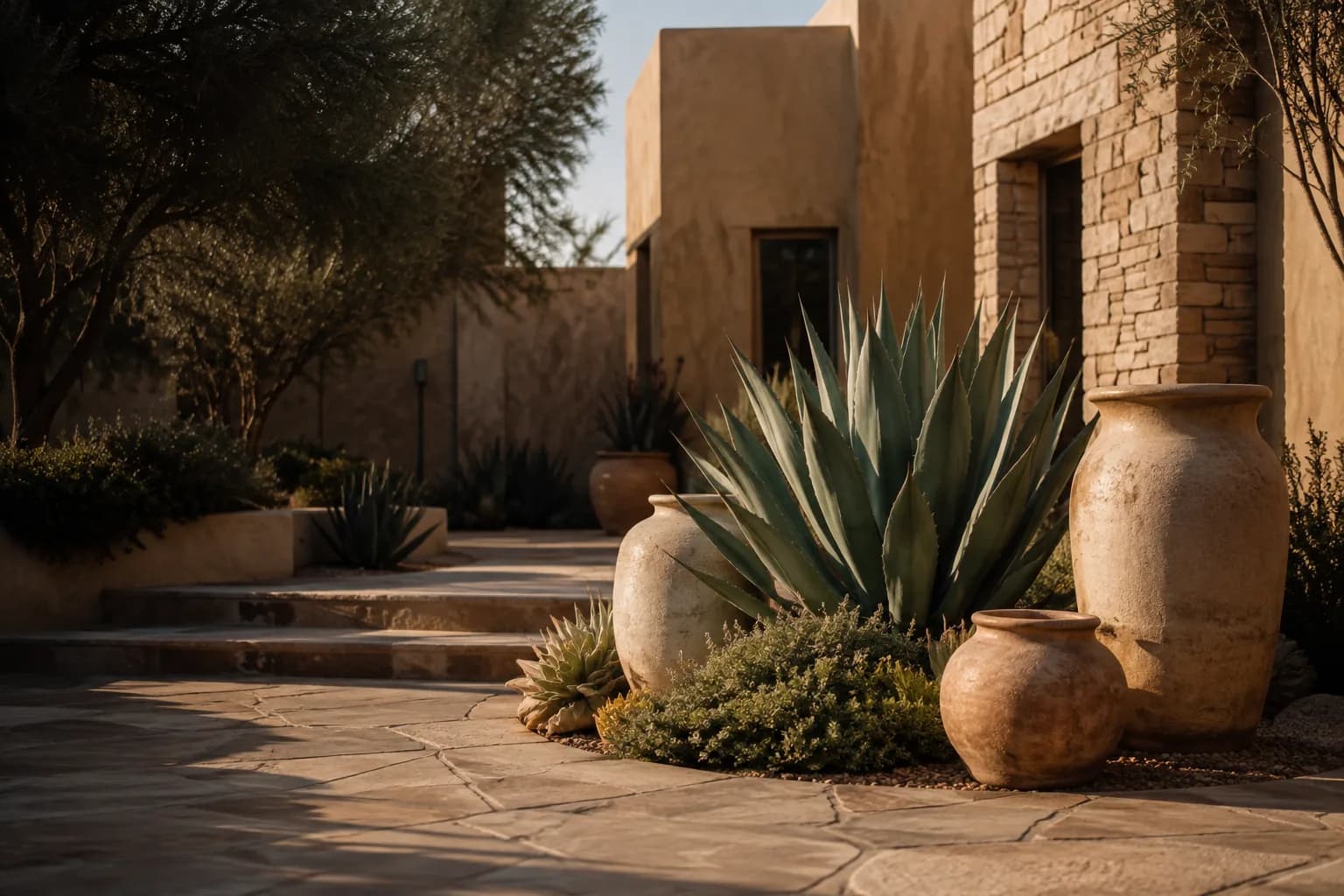
Clay brings warmth and a natural, tactile finish. Many terra-cotta pieces are porous, so moisture, weather, and mineral deposits can change their appearance over time. The firing and finish determine how a specific piece should be used and cared for.
Lightweight composites
Fiberglass and reinforced-concrete designs can give a large piece visual presence with less weight than traditional cast stone. Construction and finish vary widely, so the material name alone does not tell the whole story.
What the listing should tell you
Weight & footprint Is the destination ready for the piece, and can it reach that spot safely?
Drainage & water Does a planter drain freely? For a fountain, what pump and water capacity does the maker specify?
Finish & climate Is variation expected? What does the maker advise for sun, cleaning, and winter conditions?